
Scratching of relays, potentiometers & switches
Relays, potentiometers and switches scratch – wear parts in hi-fi equipment
Anyone who owns classic amplifiers, receivers or preamplifiers is familiar with the problem: when you turn the volume control, there is crackling from the speakers; when you press a switch, there are dropouts or a channel fails briefly. The diagnosis is often that the hi-fi control knob is scratching. For many users, this is initially just a nuisance, but it is actually a clear sign of wear and tear on mechanical components. This article explains why relays, potentiometers (the component behind the rotary control) and switches are among the typical wear parts in hi-fi equipment, how defects manifest themselves, how to diagnose them correctly and why only a professional repair can provide a long-term solution.
Why mechanical components in hi-fi systems age
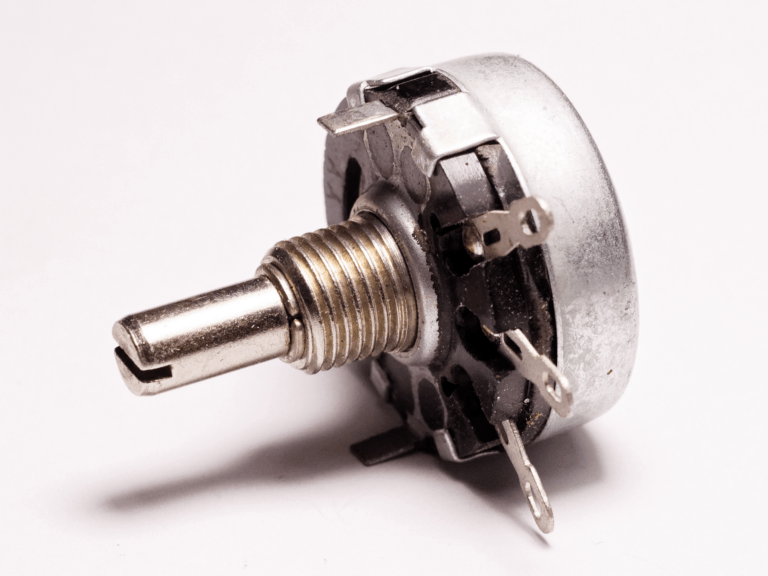
Unlike many electronic components, potentiometers, switches and relays are subject to mechanical stress. They consist of moving contacts, sliding tracks and springs that rub against each other every time they are used. Open designs that are not hermetically sealed are particularly common in devices from the 1970s, 1980s and 1990s. Over decades, dust, nicotine, grease and oxidation layers accumulate on the contact surfaces.
In potentiometers – such as volume or balance controls – a slider glides over a resistive track. If this track becomes dirty or worn, contact interruptions occur. This typically manifests itself in the following ways: the hi-fi control knob scratches, crackles when turned, or the level jumps unevenly. The situation is similar with switches and relays, whose contacts lose their secure electrical connection due to oxidation.

Typical symptoms: How wear and tear manifests itself
The signs of worn mechanical components are usually quite clear. Scratching noises when turning a knob, loud crackling when switching inputs, or channels that intermittently cut out are classic examples. Often, the problem only occurs in certain knob positions or disappears briefly when the knob is turned back and forth several times.
The defect is particularly noticeable with the volume potentiometer, as the audio signal is routed directly through the track. Any poor contact is immediately amplified audibly. Therefore, "scratchy hi-fi knob" is one of the most common search terms among owners of older hi-fi equipment.
How to check if the potentiometer, switch or relay is really to blame
Before taking any action, you should ensure that the cause actually lies in the mechanical component. A good first test is to carefully move the affected control or switch while the device is running. If the noise changes directly with the movement, this strongly suggests contact problems.
Comparing the channels can also help: If the crackling only occurs on the left or right side, the fault often lies in the corresponding signal path or the potentiometer. Relay problems frequently manifest as a channel only working after a few seconds or briefly functioning again after lightly tapping the device. All these symptoms clearly point to wear on mechanical contacts.
Why contact spray usually does more harm than good
Many people immediately reach for contact cleaner when their potentiometers are scratchy. The problem often seems solved in the short term – but this is precisely where the danger lies. While aggressive contact cleaners do dissolve oxide layers, they simultaneously attack the sensitive resistive tracks of potentiometers. Carbon tracks, in particular, are effectively washed away, which massively accelerates wear.
Furthermore, many sprays don't provide lasting lubrication. The control then runs dry, leading to even greater wear. The result: The hi-fi rotary control starts scratching again after a short time – often worse than before. In many cases, a potentiometer that was initially still salvageable is irreparably damaged by the wrong spray.
What can help in the short term – and where the limits lie
Gently moving the control knob through its entire range of rotation can sometimes provide temporary relief, as it disperses loose deposits. Slightly warming the device through extended operation can also temporarily reduce contact problems. However, these measures are not a repair, but at best treat the symptoms.
At the latest when the crackling occurs regularly or entire channels fail, it's clear: the component needs to be professionally overhauled or replaced. High-quality potentiometers from TKD, Alps or Bourns are suitable options.
What a professional repair really looks like
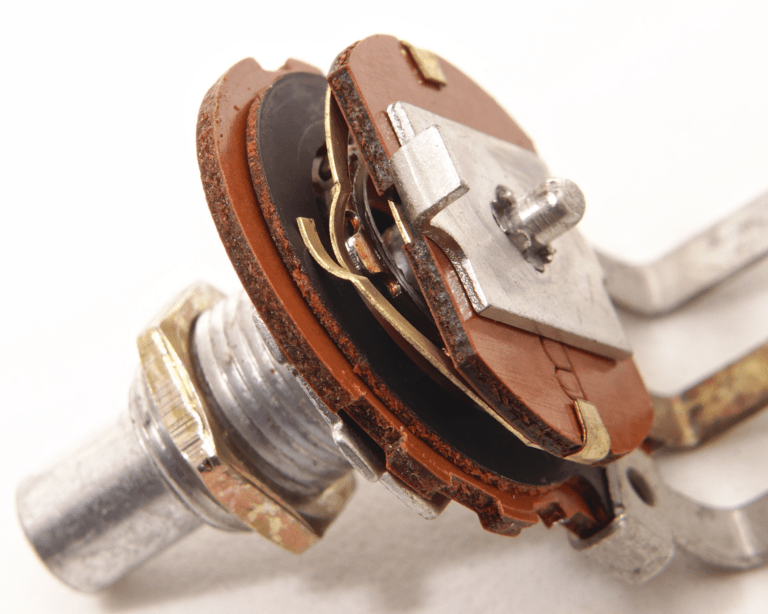
A sustainable repair of mechanical hi-fi components requires experience and proper handling. With potentiometers, this often means completely removing them and – if possible – disassembling them. The individual contact surfaces and tracks are then carefully cleaned with special tuner spray to remove oxidation without damaging the material.
After cleaning, targeted lubrication is applied, for example with petroleum jelly spray or suitable contact grease. This lubrication is crucial as it reduces wear and ensures smooth, quiet operation. The potentiometer is then reassembled and tested. In cases where the resistive track is already heavily worn, the only option is professional replacement with a suitable spare part.
With relays, the contacts are either cleaned or – which is often more sensible in the long run – completely replaced. Depending on their design, switches can also be disassembled and overhauled or replaced with new components.
Conclusion – Scratchy controls are not a harmless flaw
If a hi-fi rotary control is scratchy, it's almost always a clear indication of wear and tear on mechanical components. Potentiometers, switches, and relays are among the parts that inevitably age over the decades. Improper treatments, such as using aggressive contact cleaner, often permanently worsen the problem.
A professional repair restores the original function, ensures long-term reliability, and preserves the value of classic hi-fi equipment. Anyone who wants to enjoy their hi-fi treasures for years to come should therefore not ignore scratchy controls, but rather see them for what they are: an important maintenance indicator.